

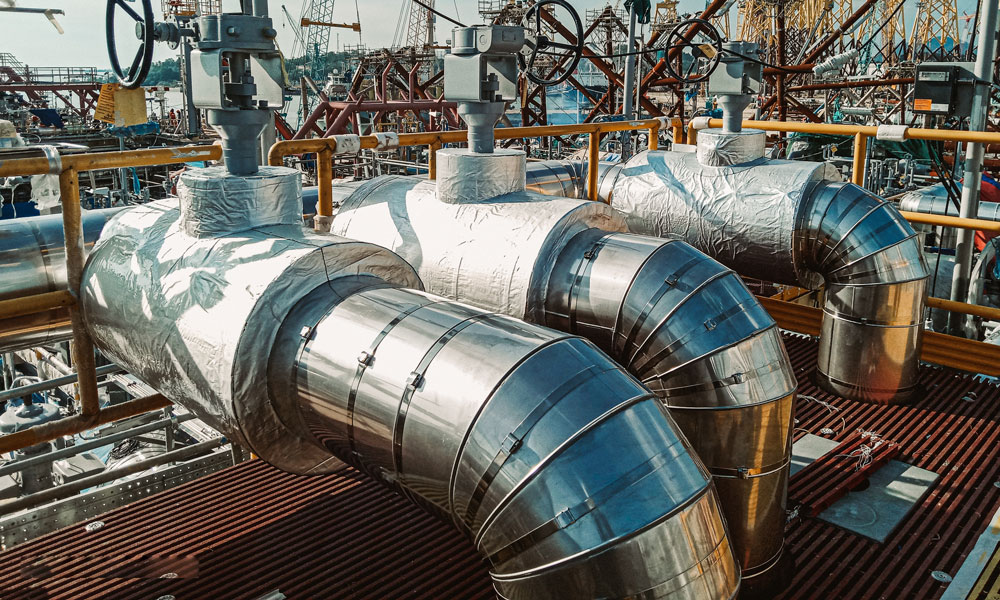
Industrial insulation doesn’t usually fail all at once. It wears down over time. Materials break, absorb moisture, or shift out of place. Systems keep running, but not the way they should. Costs increase slowly. Performance drops in small ways that are easy to ignore.
By the time insulation becomes an obvious problem, it has usually been affecting the system for a while.
Why Insulation Failure Is Often Missed Early
Most facilities don’t track insulation performance directly. There’s no alert when a section starts to degrade. Systems continue operating, so it doesn’t feel urgent.
Instead, the impact shows up in indirect ways:
- Energy costs begin to rise
- Equipment runs longer cycles
- Maintenance issues appear more frequently
- Temperature control becomes less consistent
Because these changes happen gradually, insulation problems are often overlooked until they reach a point where repair is no longer simple.
Visible Damage Is the First Clear Indicator
Some insulation issues are easy to spot. When material is missing or damaged, performance drops immediately.
Common signs include:
- Cracked or broken insulation
- Sections that have been removed and not replaced
- Materials that appear worn or deteriorated
Even small gaps create areas where heat escapes or enters the system. Over time, these small areas expand into larger inefficiencies.
Moisture Is One of the Biggest Warning Signs
Moisture changes how insulation performs. Once insulation becomes wet, its ability to control temperature is reduced.
You might see:
- Staining or discoloration
- Damp or saturated materials
- Condensation forming on surfaces
Moisture doesn’t just affect insulation. It also creates conditions for corrosion, especially on metal surfaces underneath.
In many cases, once insulation is saturated, replacement is the only option.
Hot Spots Point to Gaps in Coverage
Industrial insulation is meant to create consistent surface temperatures. When certain areas feel hotter than others, it usually means there is a break in coverage.
Hot spots can indicate:
- Missing insulation sections
- Compressed or degraded materials
- Improper installation
These areas often go unnoticed until someone physically checks the system or notices unsafe surface temperatures.
Rising Energy Costs Without a Clear Cause
Energy loss is one of the most consistent effects of insulation failure.
If a facility sees increased energy usage without a change in production, insulation should be part of the evaluation.
Heat escaping from systems forces equipment to work harder to maintain temperature. That leads to higher fuel consumption and increased operating costs.
This is one of the earliest indicators, but it’s often attributed to other factors first.
Corrosion Under Insulation Creates Hidden Risk
Corrosion under insulation is a serious issue in industrial environments. It develops when moisture becomes trapped between insulation and metal surfaces.
The challenge is that it’s not always visible right away.
Signs may include:
- Rust near seams or edges
- Bulging or distorted insulation
- Leaks or weakened piping
By the time corrosion is visible, damage has often progressed beyond the insulation itself.
When Insulation Stops Performing Even If It Looks Intact
Not all insulation problems are visible. Materials can lose effectiveness without obvious damage.
Over time:
- Insulation becomes compressed
- Thickness is reduced
- Thermal resistance drops
This leads to increased heat transfer, even though the insulation appears to be in place.
Performance matters more than appearance.
Why Repeated Maintenance Can Be a Sign of Insulation Issues
If the same areas of a system require repeated maintenance, insulation may be part of the problem.
Recurring issues like:
- Temperature inconsistencies
- Moisture buildup
- Equipment strain
often trace back to poor insulation performance.
Addressing the insulation helps reduce these repeated issues instead of treating them as isolated problems.
Repair vs. Replacement: How to Decide
Not every insulation issue requires full replacement. In some cases, targeted repair is enough.
Repair may be appropriate when:
- Damage is limited to specific sections
- Materials are still structurally sound
- Moisture has not spread
Replacement is typically needed when:
- Insulation is saturated or degraded
- Large areas are damaged or missing
- Corrosion is present underneath
Making the right call requires understanding the condition of the system as a whole.
The Cost of Waiting Too Long
Delaying insulation repair or replacement increases the overall impact.
- Energy loss continues
- Equipment experiences more wear
- Maintenance costs increase
- Risk of downtime grows
What could have been a small repair becomes a larger project involving multiple systems.
Addressing issues early keeps costs controlled.
The Benefits of Working with an Experienced Insulation Contractor
Evaluating insulation is not always straightforward. Some issues are visible. Others are hidden beneath the surface or only show up through system performance.
An experienced contractor looks beyond what’s obvious. They assess how insulation is performing, where heat loss is occurring, and whether moisture has already caused damage.
General Insulation, Inc. works in environments where insulation performance directly affects operations. Their team approaches each project with a focus on identifying root causes, not just visible damage. That leads to more accurate recommendations, whether that means targeted repair or full replacement, and helps facilities avoid repeating the same issues over time.
Learn More About Identifying Insulation Problems
For a direct breakdown of the most common signs that insulation needs repair or replacement, this resource explains what to look for and why it matters: Signs Your Facility May Need Insulation Repair or Replacement
Final Thought
Industrial insulation affects energy use, equipment performance, and long-term system reliability. When it starts to fail, the effects don’t stay isolated.
They show up in cost, maintenance, and operational consistency.
Knowing the signs, and acting on them early, keeps those issues from growing into something more expensive and harder to fix.